Tips & Guides
The Best Pavers for Sydney Driveways and Patios (2026)
Pavers make or break an outdoor space. Get the choice right and a driveway or patio looks sharp and lasts for years; get it wrong and you are dealing with stains, heat, lipping or a surface that cannot handle the traffic. Here is how the main paver types stack up for Sydney conditions in 2026, so you can pick the right one for your block.
What are the best pavers for Sydney?
There is no single "best" paver, there is the best paver for where it is going, how it will be used and your budget. For most Sydney homes the choice comes down to three families: concrete, porcelain and natural stone. Concrete is the best all-round value, porcelain is the low-maintenance modern pick, and natural stone brings character and premium looks. Below is how each one performs.
Are concrete pavers any good?
Yes, concrete pavers are the most installed paver in Sydney and the best value for most jobs. Modern concrete pavers are large-format and low-porosity, with realistic stone-look finishes that are hard to pick from the real thing. With the right thickness and base preparation they are strong enough for driveways and stand up to daily vehicle and foot traffic without shifting. For general entertaining areas, paths and driveways on a budget, concrete is hard to beat.
Are porcelain pavers worth it?
Porcelain pavers are worth it if you want a low-maintenance, modern finish. They stay cool underfoot, resist stains and frost, and shrug off the salty air of coastal suburbs. They come in very large formats for a seamless, minimalist look with thin joints, and 2026 finishes mimic timber, stone and concrete with added slip resistance. The trade-off is a higher price, and they really need an experienced paver to lay them well.
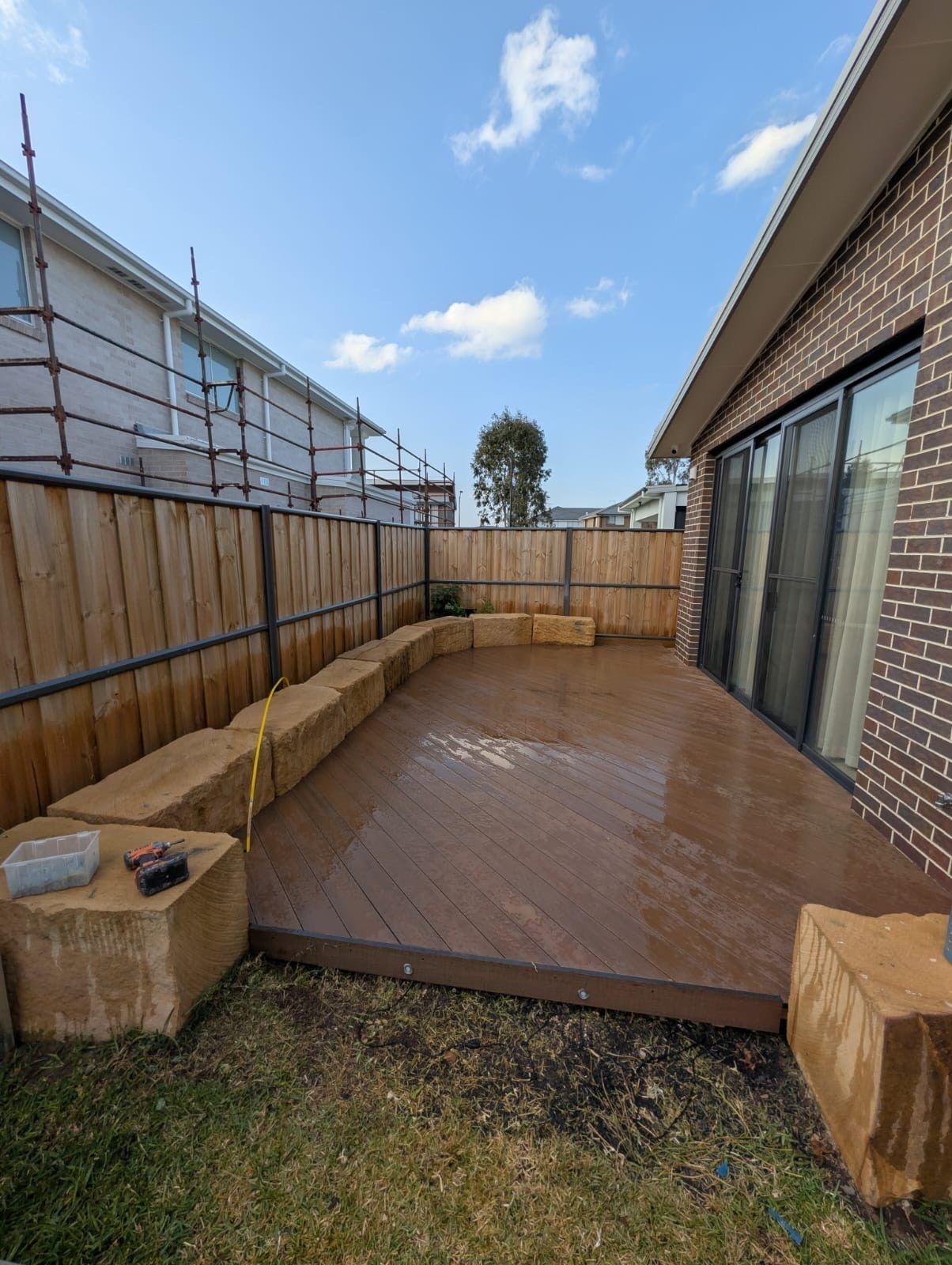
 Wide view of a paver patio being laid along a new privacy fence
Is natural stone a good choice?
Natural stone is a great choice for character homes, feature areas and pool surrounds, if the budget allows. Sandstone and bluestone suit Sydney's heritage and modern homes alike, and travertine has become the go-to pool paver because it stays cool and ages beautifully. Stone is durable and handles the weather, but it costs more and usually needs sealing to protect against stains and erosion.
Which paver is best for a driveway?
For driveways, the priority is structural strength, so a quality concrete paver at the right thickness on a compacted base is usually the best value. Some natural stone and heavy-duty pavers also handle vehicle loads, but the base and thickness matter more than the material. Whatever you choose, a driveway paver has to be rated for traffic and laid on a properly engineered base, or it will move.
The best pavers for driveways are vehicle-rated pavers, around 60mm thick, in a smaller format, laid in a herringbone pattern with solid edges. Material comes after that. Quality concrete pavers are the best all-round value, clay pavers hold their colour longest, and dense natural stone like granite, bluestone and porphyry gives the premium look while still taking the weight. Get the thickness and pattern right and most of these will perform. Get them wrong and even an expensive stone will move.
How thick should driveway pavers be?
Most Australian paver suppliers recommend 60mm as the standard thickness for a residential driveway, and some treat 50mm as the bare minimum. The thinner pavers sold for patios, paths and pool surrounds are made for foot traffic and should not go under a car.
A few things worth knowing:
- Check the product rating, not just the number. Ask the supplier whether that exact paver is rated for vehicles. Two 60mm pavers from different makers are not automatically equal.
- Think about what else uses the driveway. A caravan, a boat trailer or a tradie's truck parked there regularly puts more load on the surface than a hatchback. Tell your installer, and ask the supplier for a heavier-duty option if needed.
- Stone is cut, not moulded. Natural stone pavers come in different thicknesses depending on the quarry and cut, so confirm you are buying a driveway-grade thickness, not the patio version of the same stone.
Does paver size and shape matter?
Yes, and it is the part most people skip. Smaller, chunkier pavers spread a car's weight across lots of joints and lock together better, so they handle turning tyres well. Big, thin slabs look sleek on a patio, but under a car they have more leverage working against them and are more likely to rock or crack if anything underneath moves.
That does not rule out a larger format, but it changes how the driveway has to be built. Large-format pavers in a vehicle area generally need a stronger base, a heavier product, or in the case of thin porcelain, a concrete slab underneath instead of a sand bed. If you love the large-format look, ask for it specifically and have your installer explain how they will support it.
What is the strongest laying pattern for a driveway?
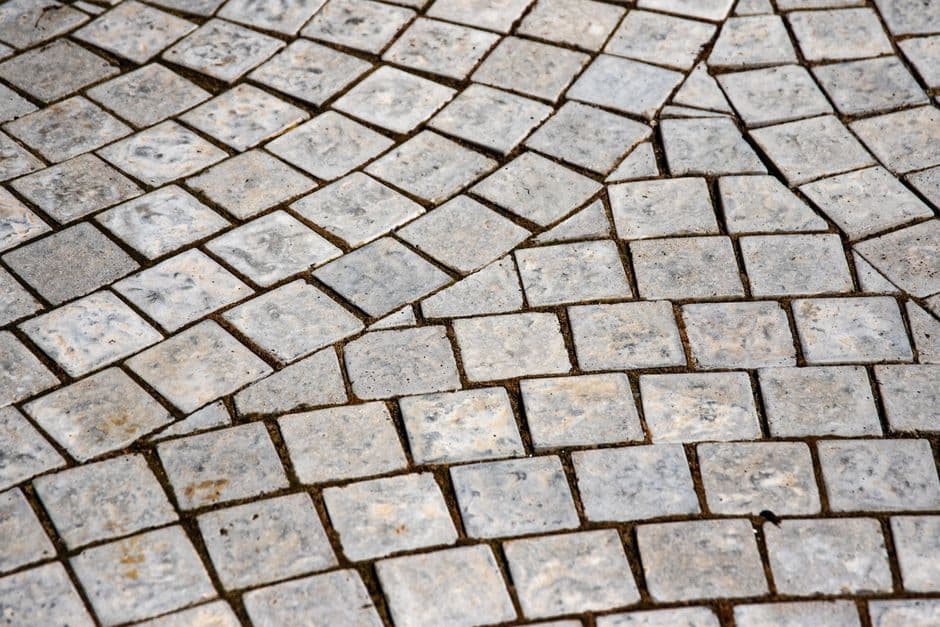
Herringbone is the strongest laying pattern for a driveway, either at 90 degrees or 45 degrees to the street. Each paver is locked in by its neighbours on more than one side, so when a tyre pushes or twists, the load is shared instead of shoving a single row along. Suppliers also point out that a well-laid herringbone tends to tighten up as it gets compacted over time.
 Infocus crew preparing the bedding layer before laying driveway pavers
Other patterns have their place:
- Stretcher bond (rows like brickwork) looks clean on a long, straight driveway, but it is less resistant to creeping on curves and in turning areas.
- Stack bond (pavers in a straight grid) has the weakest interlock and is better kept to paths and patios.
- Borders and header courses in a contrasting colour frame the driveway nicely and can tidy the edges where the pattern meets a kerb or garden bed.
Whatever the pattern, the edges have to be held. A driveway needs a solid edge restraint, usually a concrete haunch or kerb, so the field cannot slowly spread outward. Without it, the joints open and the pattern loses its grip. Built once, built right starts at the edges.
Which paver material is best for a driveway?
For most Sydney homes, concrete pavers are the best value, clay pavers are the most colourfast, and natural stone is the premium choice. Here is how each one behaves under a car:
- Concrete pavers are the most common driveway paver in Australia. They are consistent in size, widely available in vehicle-rated thicknesses and come in a big range of colours and finishes. The trade-off is that colour sits in the concrete mix, so some fading and wear can show over the years.
- Clay pavers are fired, so the colour goes right through and holds up in the sun. They are dense, smaller in format and suit traditional and federation-style homes. The colour range is warmer and more limited.
- Natural stone like granite, bluestone and porphyry is dense and hard-wearing, which is why it shows up on high-end driveways. Each piece is unique, it ages well, and it suits both heritage and modern homes. Softer stones are lovely around a pool but are a riskier pick under a car, so confirm the stone is suited to vehicle use.
- Exposed aggregate pavers have stones showing on the surface for grip. They are a good pick for a sloping block.
- Porcelain is hard and stain-resistant, but it is thin. For a driveway it is generally bonded to a concrete slab rather than laid on sand, so treat it as a specialist job and follow the manufacturer's rating.
If you want the long version on concrete, porcelain and stone across the whole yard, read our guide to the best pavers for Sydney.
What pavers are best for a steep driveway?
On a steep driveway, choose a textured, slip-resistant paver and an interlocking pattern. Exposed aggregate, flamed or split-face stone, and tumbled or rough-finished concrete give tyres and shoes something to grip, especially in a Sydney downpour. Smooth honed or polished finishes look great on the flat but get slippery on a slope.
Slopes also make the pattern and edges work harder, because gravity is constantly trying to pull the field downhill. Herringbone, strong edge restraints and sometimes intermediate concrete beams across the driveway help keep everything where it was laid. And drainage gets more important, because water running down a slope will find any weakness in the joints and the base. Plenty of blocks around Box Hill and the Hills District have a decent fall to the street, so this comes up more often than you might think.
Are permeable pavers a good idea for a driveway?
Permeable pavers can be a good idea if water is a problem on your block. They have wider joints or open cells that let rain soak through into a specially designed base, instead of sheeting off onto the street or pooling against the garage.
 buttering paver house bg
They are not a straight swap for standard pavers, though. The base underneath is built differently so it can hold and drain water, and the joints need keeping clear so they do not clog. If you are thinking about them, ask how the base will be designed for your soil. Whether permeable paving counts toward any stormwater requirement is a question for your council, so check with The Hills Shire Council or your local council before you rely on it.
What colour pavers hide oil stains best?
Mid-tone and blended colours hide oil drips, tyre marks and dirt best. Very light pavers show every drip from the car, and very dark pavers show dust, leaf litter and tyre scuffs, and they get hotter in summer. A blend of two or three tones, or a speckled finish, is the most forgiving option for a busy driveway.
A few colour tips:
- Look at a sample outside, wet and dry. Showroom lighting flatters everything.
- Match the roof, not the front door. A paver that picks up the roof colour or the brickwork will look right for longer than one matched to a trend.
- Seal where it helps. Sealing natural stone and some concrete pavers makes oil easier to clean up before it soaks in. Ask whether the paver you have chosen benefits from it.
A quick checklist before you choose
Start with the job, then the look. Tick these off before you fall in love with a sample:
- Rated for vehicles, at the right thickness.
- A format small enough to interlock, or a clear plan to support a larger one.
- Laid in herringbone, with proper edge restraints.
- A finish with enough grip for your slope.
- A colour that hides what your driveway actually sees: oil, dust and tyres.
- A plan for drainage and the base.
And when you are comparing quotes, ask each contractor how they will build the base and hold the edges, and check their licence on NSW Fair Trading. That is where quality really differs. For a feel for what different materials cost to lay, see our paving cost per square metre guide.
Which paver stays coolest around a pool?
Porcelain and travertine are the coolest underfoot, which is why they dominate Sydney pool surrounds. Both resist heat far better than dark concrete, and both offer slip-resistant finishes suited to wet areas.
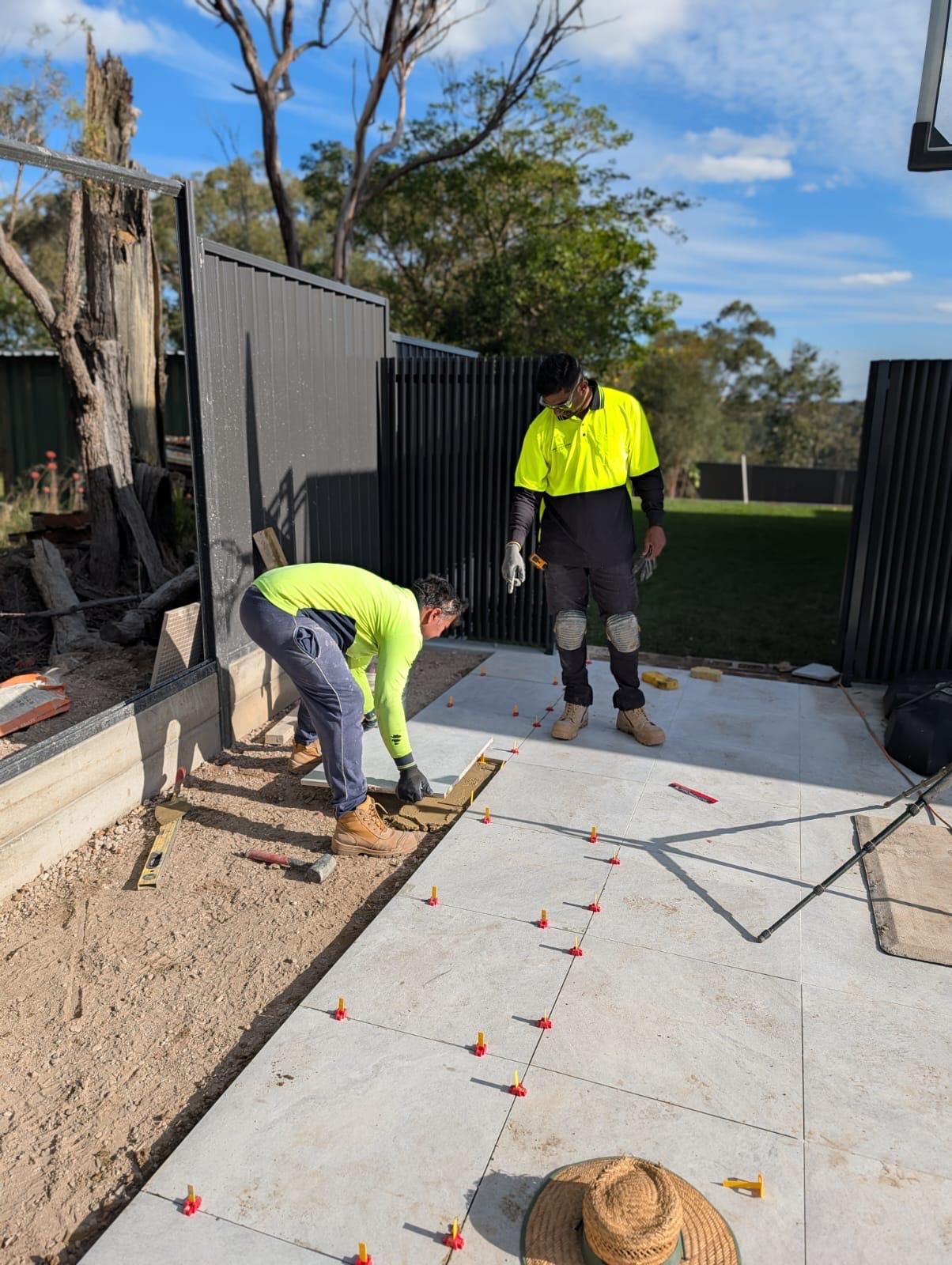
 Infocus crew laying large-format pavers beside a black aluminium slat gate
The base matters more than the paver
Here is the part people miss: the best paver in the world will fail on a bad base. Pooling, lipping and weeds almost always come down to poor excavation, the wrong falls, or skipped compaction, not the paver itself. Spend on getting the base and drainage right, and a mid-range paver will outperform a premium one laid badly.
Do you need approval to pave a driveway?
Repaving an existing surface is usually exempt, but a new or widened driveway crossover (where the driveway meets the road) generally needs council approval and has to meet the council's specifications. Check the rules with The Hills Shire Council before you start, and factor any crossover work into your budget.
How do you keep pavers looking good?
Most pavers are low-maintenance, but a little care goes a long way:
- Sweep and rinse regularly to stop grit grinding into the surface.
- Re-sand the joints every few years so the field stays locked together and weed-free.
- Seal natural stone and some concrete to resist staining, and reseal as recommended.
- Treat spills early, especially oil on a driveway, before they set into a stain.
If you are hiring out the job, it is worth checking your contractor's licence on NSW Fair Trading and asking exactly how they prepare the base, because that is where quality and price really differ.
Get it laid right
The best paver for your project depends on the spot, the use, the look and the budget, and on the base it sits on. A good paver will walk you through the options and then prepare the ground properly so the surface lasts.
At Infocus Land Solutions we lay concrete, porcelain and natural stone across Box Hill and the Hills District, always on a base built to last. See our paving and driveways service in Box Hill or get in touch for a free site visit and quote. Built once, built right.
Talk to Mike
Get an honest quote for your place
0406 100 318A free quote, no obligation, and the price we give is the price you pay.