Tips & Guides
Paving Cost Per Square Metre in Sydney, What Drives the Number
What is the paving cost per square metre in Sydney?
There is no single figure, and any quote that offers one without seeing the site is a guess. Published Australian cost guides put installed paving across a wide band per square metre, with material choice and site preparation accounting for most of the spread. The Airtasker outdoor paving cost guide lists installation labour at roughly $25 to $55 per square metre and material costs varying by type, for instance concrete around $65 to $110 and travertine around $50 to $90 per square metre, with whole projects ranging from a few thousand dollars to well over ten.
Those are third party market figures, not our prices. We quote per job, on the block, after we have seen what is under the surface. What follows is what actually moves that number, so you can read any quote you receive with your eyes open.
Why is the range so wide?
Because a square metre of paving is not one product. It is a stack of decisions, and only the top layer is the bit you can see.
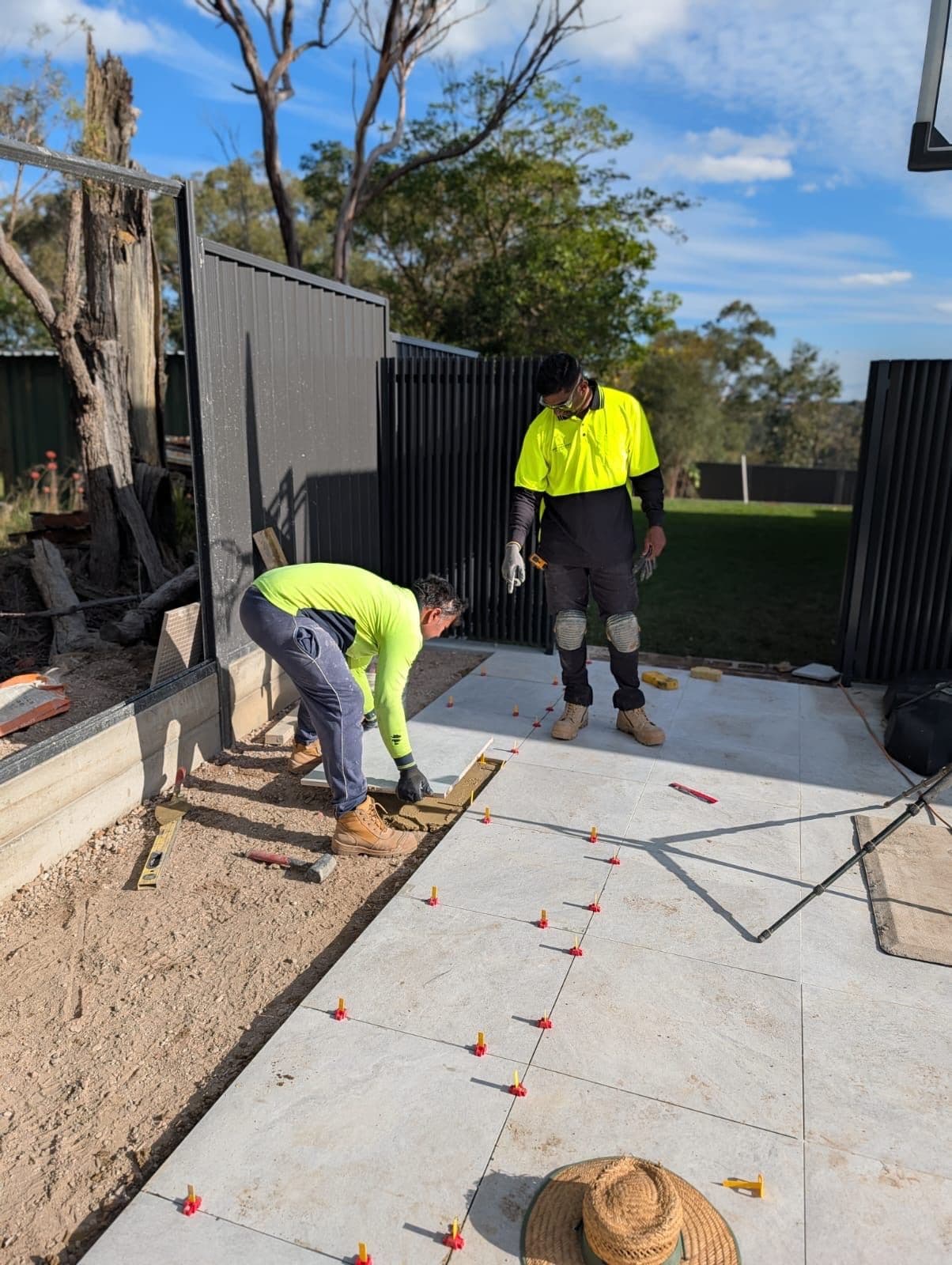
Under a properly built paved surface there is excavation to the right depth, a compacted road base, a screeded bedding layer, an edge restraint holding the whole field in, jointing sand, and somewhere for water to go. Change any of those and the price per square metre changes with it, without the finished photo looking any different on day one.
That is precisely why two quotes for the same patio can differ by thousands. Usually one of them has priced the base and the other has priced the pavers.
What actually drives the cost?
Six things drive it, and they are listed here roughly in order of how much each one moves the final figure per square metre.
- Material. Concrete and brick pavers sit at the affordable end. Sandstone, bluestone, travertine and porcelain sit well above them, and the same paver in a larger format or a honed finish costs more again. Our guide to the best pavers for Sydney conditions goes through how each behaves here.
- Excavation and base. Depth is set by use. A courtyard path and a driveway that carries a loaded ute are not the same build, and the driveway needs deeper excavation and more road base under it.
- Drainage. If water has nowhere to go it will find somewhere, usually the back of your house. Falls, agricultural drains and stormwater connections are real work and real cost, and they are the first thing a cheap quote quietly leaves out.
- Cutting and pattern. A rectangular patio in a stack bond is fast. Herringbone, circles, curved edges and stepped levels all mean more cutting, more waste and more hours.
- Site access. If a bobcat can reach the area, the excavation is efficient. If everything has to be barrowed through a side gate, the same job takes considerably longer.
- What is already there. Lifting old concrete or existing pavers, and removing the spoil, is a job in its own right before a single new paver is laid.
Are driveways more expensive per square metre than patios?
Yes, generally, because a driveway has to carry vehicle loads and a patio does not.
That means deeper excavation, more compacted base, and often a thicker or denser paver. Add the crossover to the kerb, drainage across the entry and edge restraints strong enough to stop the field creeping under repeated turning loads, and the cost per square metre climbs even though the paver on top may be identical. There is more detail in our driveway paving guide for Sydney.
Why does the base matter more than the paver?
Because the base is what fails, and the paver is what gets blamed.
Sunken corners, rocking pavers, pooling water and weeds in the joints are almost never a paver problem. They are a compaction, drainage or edge restraint problem, showing up two or three years later. The base is also the part you cannot inspect once the job is done, which is exactly why it is where corners get cut.
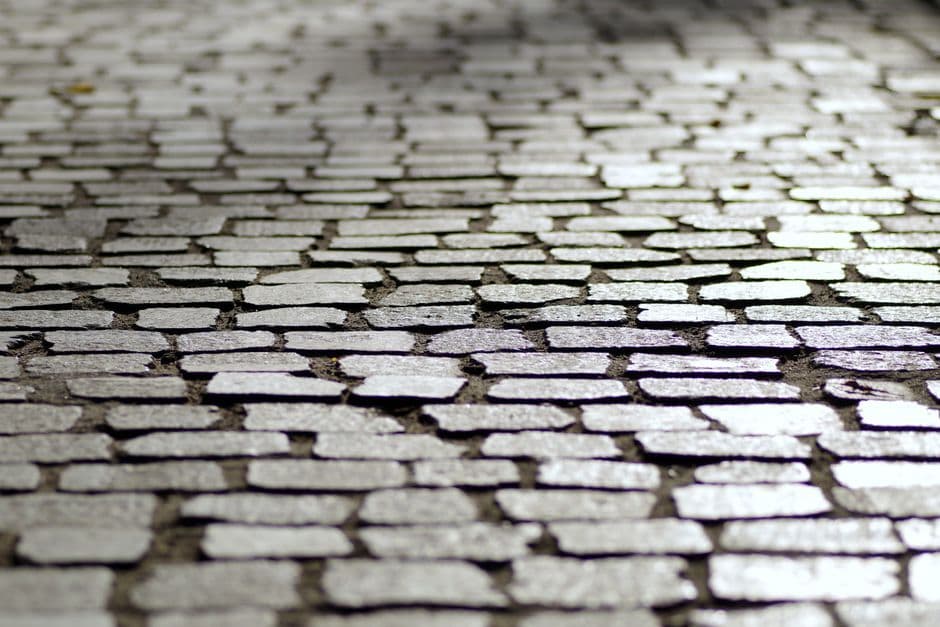
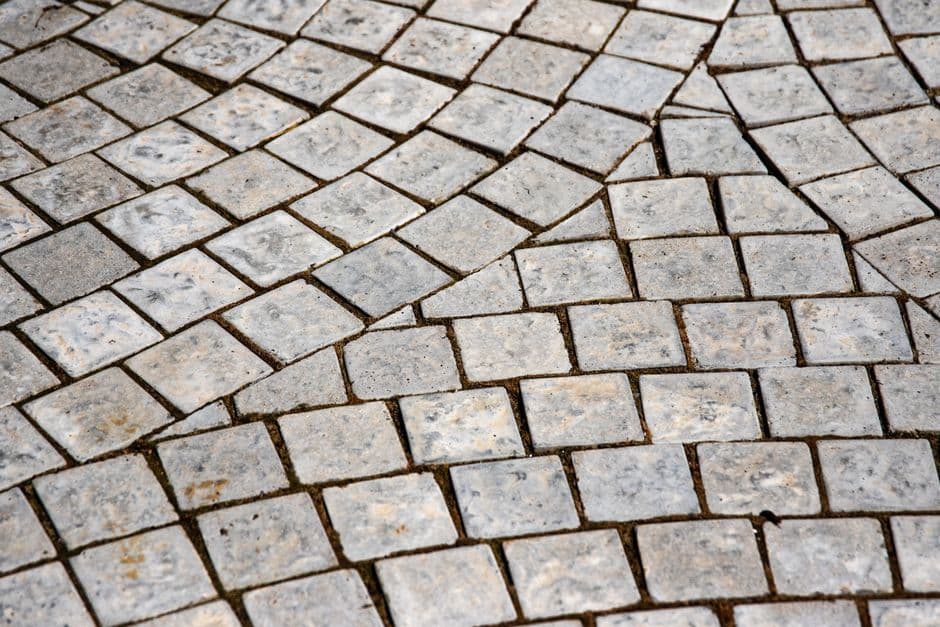
 Old cobblestone path featuring granite stones in a classic pattern, offering a textured surface view.
When you are comparing quotes, the useful question is not "what pavers are these" but "how deep are you excavating, what base are you putting down, how are you compacting it, and where is the water going". A builder who answers that easily has priced it. One who changes the subject has not.
How do you compare two paving quotes?
Line by line, on scope rather than on the total, because the totals are only comparable if the scopes are.
Check that both quotes cover excavation depth, spoil removal, base material and depth, bedding, edge restraint, jointing, drainage, cutting allowance and clean up. Check whether the paver is named by product rather than by category. Check what happens to the old surface. Then compare. Nine times out of ten the gap between two prices explains itself in that list.
For consumer protections and what a written contract should cover before work starts, NSW Fair Trading is the authority worth reading.
Do you need council approval to pave?
Sometimes, and it depends on where and how much, so it is worth checking before you commit rather than after.
Paving that changes stormwater flow, work in a heritage area, and a new or widened driveway crossover are the common triggers. Crossovers in particular usually involve your local council directly. Your local council covers crossover requirements, and the NSW Planning Portal sets out what falls under exempt and complying development.
Get a real number for your site
The honest way to price paving is to look at the site: the area, the levels, the access, what is underneath and where the water needs to go. Then you get a figure that holds instead of a range that moves.
Infocus Land Solutions builds paving and driveways across the Hills District and greater Sydney, from Box Hill and Rouse Hill through Kellyville and Castle Hill. Have a look at paving and driveways, the areas we serve, or send through the dimensions and a couple of photos and we will come and measure it up properly.
Get an honest quote for your place
A free quote, no obligation, and the price we give is the price you pay.