Tips & Guides
Decking vs Pavers: Which Suits Your Sydney Backyard?
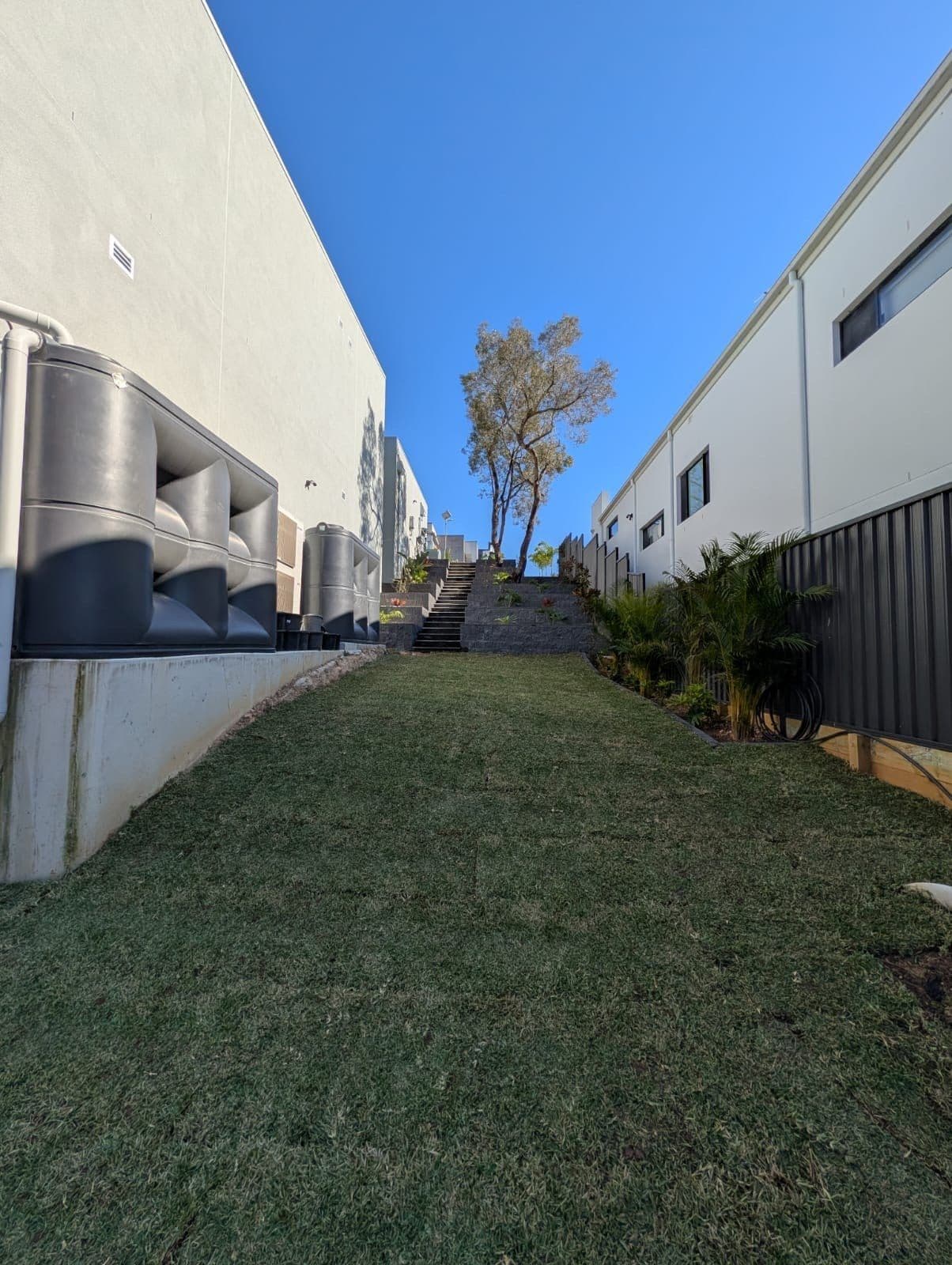
Decking vs pavers is the question that comes up on almost every backyard we quote in the Hills District, usually while someone is standing at the back door, staring at a slope and wondering why the previous owner left it like that. Both make a great outdoor entertaining area. The right one comes down to your block, how you use the space, and how much weekend upkeep you are honestly up for.
Here is how a timber or composite deck stacks up against a paved patio for Sydney conditions, so you can make the call with your eyes open.
Is decking or paving better for a Sydney backyard?
Paving is usually the better choice on flat or gently sloping ground, and an elevated deck usually wins on a sloping block or where you want the outdoor area level with the house. Pavers sit at ground level, so they suit outdoor living spaces that flow straight into lawn and garden beds. A deck sits on a subframe, so it can step out from a raised floor level without a wall of fill and retaining underneath. Everything else, from heat to durability, is a tiebreaker once you know what the topography is doing.
Which is better on a sloping block?
A deck is generally the better option on a sloping block. Because it stands on posts and bearers, it can bridge a fall in the yard and give you a flat, usable area without major earthworks. Paving a slope means cutting and filling the site, then holding it with a retaining wall and steps, which is very doable but adds work and cost.
Plenty of newer homes around Box Hill, Rouse Hill and Kellyville have back doors sitting well above the yard. On those, a deck off the living area is often the simplest way to get a level entertaining space. On a flatter block, the same budget usually goes further in pavers.
Which gets hotter in the Sydney sun?
Dark composite decking and dark pavers both get hot in a western Sydney summer, so colour matters more than the material type. Lighter colours stay noticeably cooler underfoot. Among pavers, porcelain and travertine are the cool, barefoot-friendly picks, which is why they show up around so many pools (more on that in our guide to the best pavers for Sydney). Timber decking is generally kinder to bare feet than dark composite, but it still warms up in full afternoon sun. If the area faces west with no shade, factor in a pergola or shade sail whichever surface you choose.
 Backyard before the deck build, patchy lawn beside a sandstone block edge
Which needs less maintenance?
Pavers are the lower-maintenance option for most people, provided the base preparation was done right. A sweep, a hose down and topping up joint sand now and then keeps a paved area looking sharp. Natural stone and some concrete pavers also benefit from sealing.
Timber decking needs the most care. Expect to clean and re-oil (or stain) it regularly to protect hardwood boards from the sun and stop them greying, cracking, cupping or eventually developing rot. Composite decking sits in between: no oiling or staining, just a wash down, though it can still mark and fade. If you would rather spend Saturday using the backyard than looking after it, that leans towards pavers or composite.
Which lasts longer, a deck or pavers?
Laid on a properly prepared base, a paved area generally outlasts a timber deck, and individual pavers can be lifted and replaced if one cracks or a tree root pushes up. A deck's life depends heavily on the material, the subframe and how well it is maintained, and a well-built composite deck closes much of the gap. The honest answer is that build quality matters more than the material. A paved area on a poor base will sink and lip; a deck with a poorly ventilated, poorly fixed subframe will move and squeak. We will talk you through realistic expectations for your specific materials when we quote on site.
Termites and timber decks
Termites are a real consideration for any timber outdoor structure in Sydney. A timber deck, and especially its subframe, needs suitable treated or durable timber, good ventilation and clearance underneath, and enough access to inspect it. Steel or aluminium subframes are another way to reduce the risk. Pavers, of course, give termites nothing to eat. If your home already has a termite management system in place, a new deck should not create a hidden bridge around it, so it is worth checking with your pest inspector before the build.
Which is better around a pool?
Pavers are the more common choice for pool surrounds in Sydney, with porcelain, travertine and some natural stones offering cool, slip-resistant finishes that handle wet feet and pool chemicals well. Decking can work around a pool too, and composite boards are popular there, but it needs the right board, slip resistance, spacing and drainage for a constantly wet area. Pool barriers and fencing have their own rules in NSW, so whichever surface you choose, the layout has to work with the pool fence, not against it.
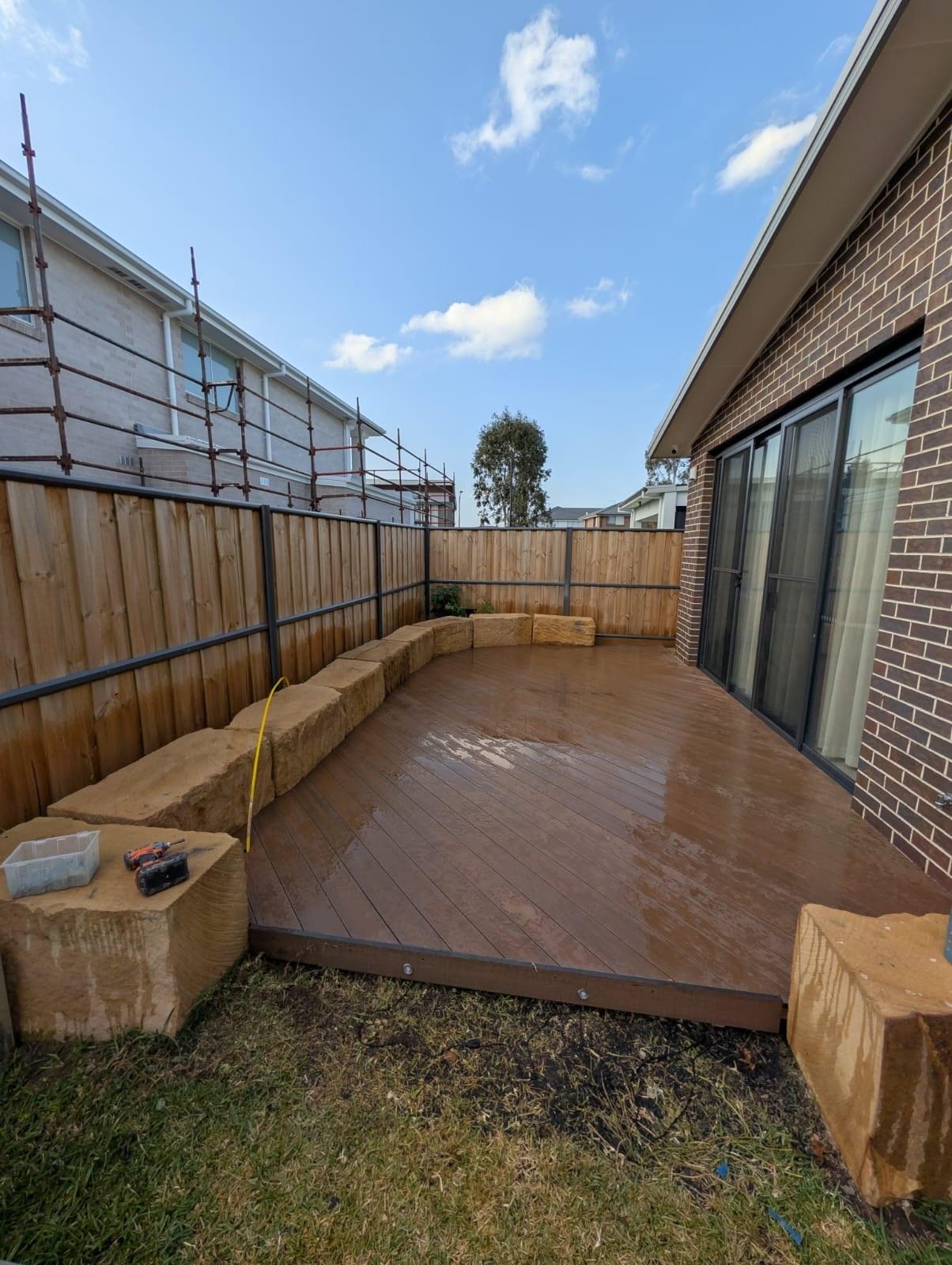
 Low deck built by Infocus Land Solutions in a small internal courtyard
Does bushfire zoning affect decking or paving?
It can. If your property is in a bushfire prone area, its bushfire attack level (BAL) rating may limit which decking materials and construction details are allowed, while pavers are non-combustible. Parts of the Hills District back onto bushland, so this is worth checking early, not after the boards are ordered. The NSW Rural Fire Service explains how building in a bushfire area works, and you can look up your property's planning details on the NSW Planning Portal. We will confirm what applies to your block before you commit to a material.
Can you mix decking and pavers?
Yes, and on a lot of Sydney blocks, choosing to combine both gives the best result. A common layout is a deck off the living room at floor height, with steps down to a paved area for the barbecue, outdoor dining or a fire pit, then lawn and garden beyond. You get a level transition from the house, a hard-wearing surface where the heavy use happens, and less timber to maintain overall.
Mixing also helps on blocks with a fall: the deck handles the high side, and retaining, steps and pavers handle the rest. Pulling it together as one design, rather than adding pieces over the years, is where good landscaping and garden design earns its keep.
The quick way to decide
- Sloping block or raised back door? Lean deck.
- Flat ground that flows into lawn and gardens? Lean pavers.
- Pool surround? Usually pavers, or carefully chosen composite.
- Low upkeep is the priority? Pavers or composite over timber.
- Bushfire prone area? Check your BAL before choosing a decking material.
- Can't decide? Do both, designed as one space.
Whichever way you go, check your contractor's licence on NSW Fair Trading and ask how they prepare the base or build the subframe, because that is where the quality really sits.
Get the right surface for your block
At Infocus Land Solutions we build both, so we have no reason to push one over the other. We will look at the slope, the aspect, the pool and how you actually use the yard, then tell you what makes sense and quote it properly on site. See our decking and pergolas service in Box Hill, our paving and driveways work, or get in touch for a free site visit. Built once, built right.
Talk to Mike
Get an honest quote for your place
0406 100 318A free quote, no obligation, and the price we give is the price you pay.