Tips & Guides
The Best Pavers for Driveways: Thickness, Pattern and Material Explained
A patio paver spends its life being walked on, sat on and occasionally having a sausage dropped on it. A driveway paver gets a two-tonne SUV parked on it, turned on it, and braked on it every day for twenty years. Same shop, same showroom, very different job. Which is why the best pavers for driveways are not simply the best-looking pavers in the catalogue.
This guide is about choosing the paver itself: thickness, size, laying pattern, material, finish and colour. If you want what a driveway costs, or what has to happen underneath it, we have covered those in our driveway paving guide for Sydney.
What are the best pavers for driveways?
The best pavers for driveways are vehicle-rated pavers, around 60mm thick, in a smaller format, laid in a herringbone pattern with solid edges. Material comes after that. Quality concrete pavers are the best all-round value, clay pavers hold their colour longest, and dense natural stone like granite, bluestone and porphyry gives the premium look while still taking the weight. Get the thickness and pattern right and most of these will perform. Get them wrong and even an expensive stone will move.
How thick should driveway pavers be?
Most Australian paver suppliers recommend 60mm as the standard thickness for a residential driveway, and some treat 50mm as the bare minimum. The thinner pavers sold for patios, paths and pool surrounds are made for foot traffic and should not go under a car.
A few things worth knowing:
- Check the product rating, not just the number. Ask the supplier whether that exact paver is rated for vehicles. Two 60mm pavers from different makers are not automatically equal.
- Think about what else uses the driveway. A caravan, a boat trailer or a tradie's truck parked there regularly puts more load on the surface than a hatchback. Tell your installer, and ask the supplier for a heavier-duty option if needed.
- Stone is cut, not moulded. Natural stone pavers come in different thicknesses depending on the quarry and cut, so confirm you are buying a driveway-grade thickness, not the patio version of the same stone.
Does paver size and shape matter?
Yes, and it is the part most people skip. Smaller, chunkier pavers spread a car's weight across lots of joints and lock together better, so they handle turning tyres well. Big, thin slabs look sleek on a patio, but under a car they have more leverage working against them and are more likely to rock or crack if anything underneath moves.
That does not rule out a larger format, but it changes how the driveway has to be built. Large-format pavers in a vehicle area generally need a stronger base, a heavier product, or in the case of thin porcelain, a concrete slab underneath instead of a sand bed. If you love the large-format look, ask for it specifically and have your installer explain how they will support it.
What is the strongest laying pattern for a driveway?
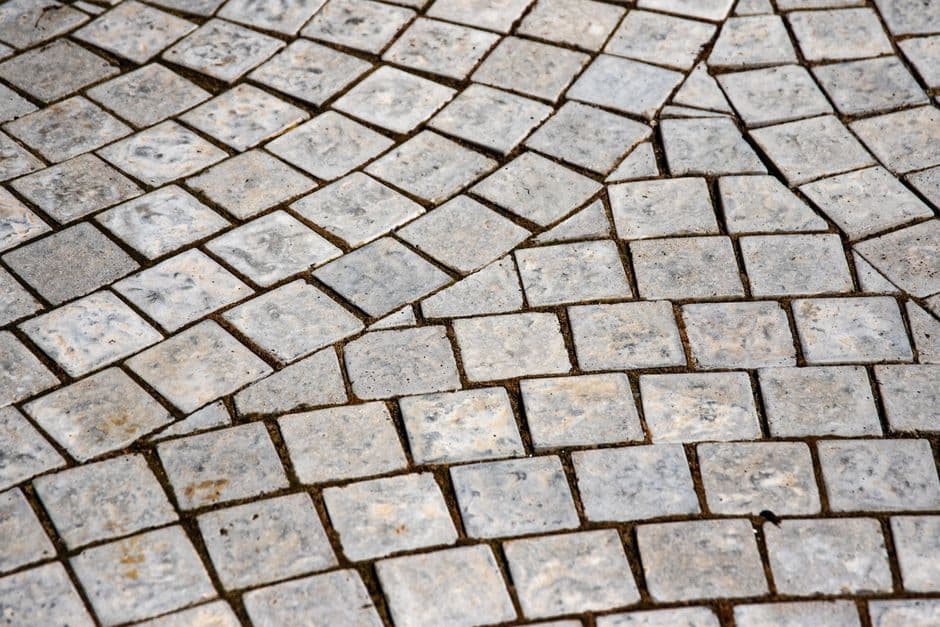
Herringbone is the strongest laying pattern for a driveway, either at 90 degrees or 45 degrees to the street. Each paver is locked in by its neighbours on more than one side, so when a tyre pushes or twists, the load is shared instead of shoving a single row along. Suppliers also point out that a well-laid herringbone tends to tighten up as it gets compacted over time.
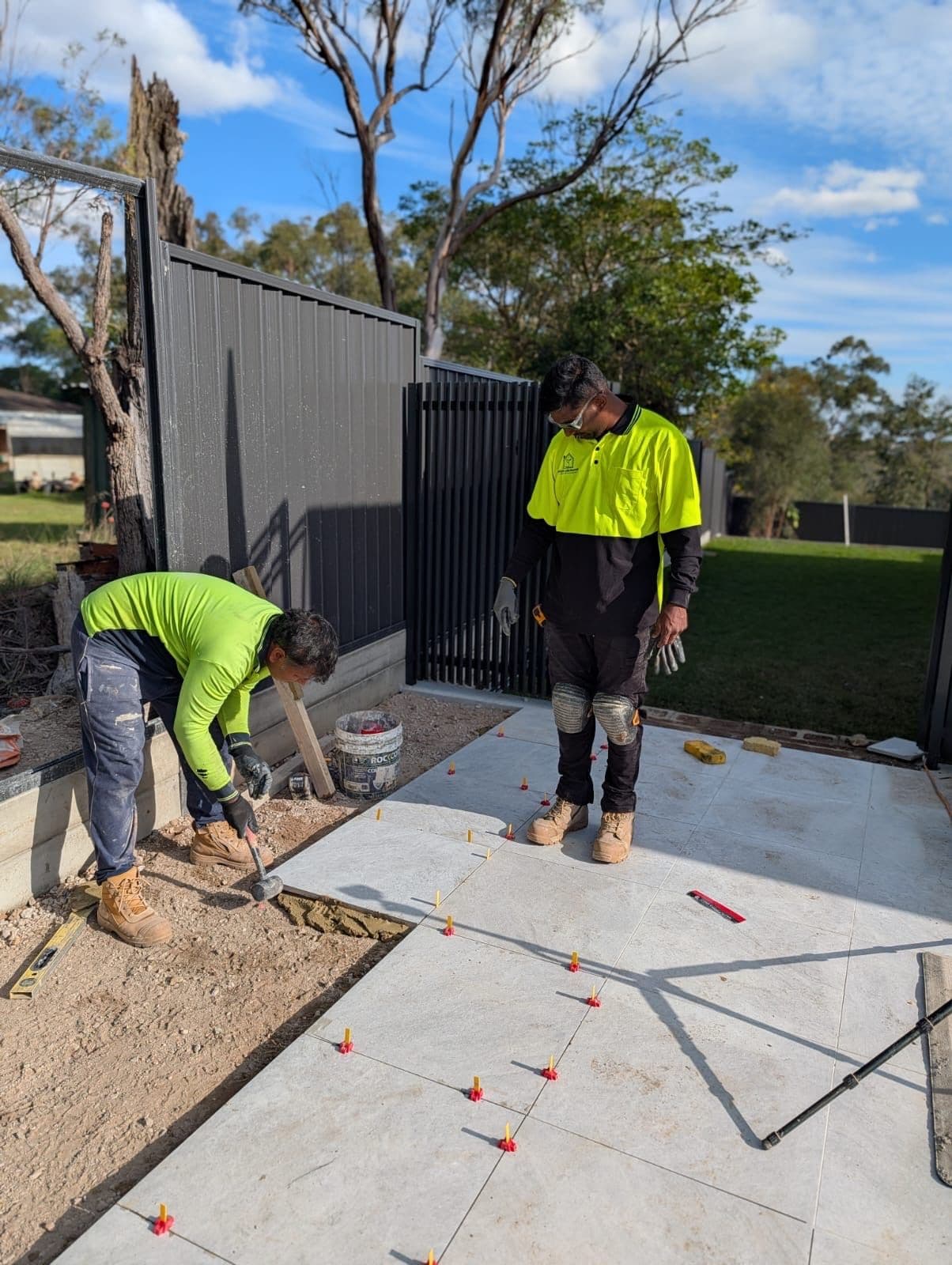
 Infocus crew preparing the bedding layer before laying driveway pavers
Other patterns have their place:
- Stretcher bond (rows like brickwork) looks clean on a long, straight driveway, but it is less resistant to creeping on curves and in turning areas.
- Stack bond (pavers in a straight grid) has the weakest interlock and is better kept to paths and patios.
- Borders and header courses in a contrasting colour frame the driveway nicely and can tidy the edges where the pattern meets a kerb or garden bed.
Whatever the pattern, the edges have to be held. A driveway needs a solid edge restraint, usually a concrete haunch or kerb, so the field cannot slowly spread outward. Without it, the joints open and the pattern loses its grip. Built once, built right starts at the edges.
Which paver material is best for a driveway?
For most Sydney homes, concrete pavers are the best value, clay pavers are the most colourfast, and natural stone is the premium choice. Here is how each one behaves under a car:
- Concrete pavers are the most common driveway paver in Australia. They are consistent in size, widely available in vehicle-rated thicknesses and come in a big range of colours and finishes. The trade-off is that colour sits in the concrete mix, so some fading and wear can show over the years.
- Clay pavers are fired, so the colour goes right through and holds up in the sun. They are dense, smaller in format and suit traditional and federation-style homes. The colour range is warmer and more limited.
- Natural stone like granite, bluestone and porphyry is dense and hard-wearing, which is why it shows up on high-end driveways. Each piece is unique, it ages well, and it suits both heritage and modern homes. Softer stones are lovely around a pool but are a riskier pick under a car, so confirm the stone is suited to vehicle use.
- Exposed aggregate pavers have stones showing on the surface for grip. They are a good pick for a sloping block.
- Porcelain is hard and stain-resistant, but it is thin. For a driveway it is generally bonded to a concrete slab rather than laid on sand, so treat it as a specialist job and follow the manufacturer's rating.
If you want the long version on concrete, porcelain and stone across the whole yard, read our guide to the best pavers for Sydney.
What pavers are best for a steep driveway?
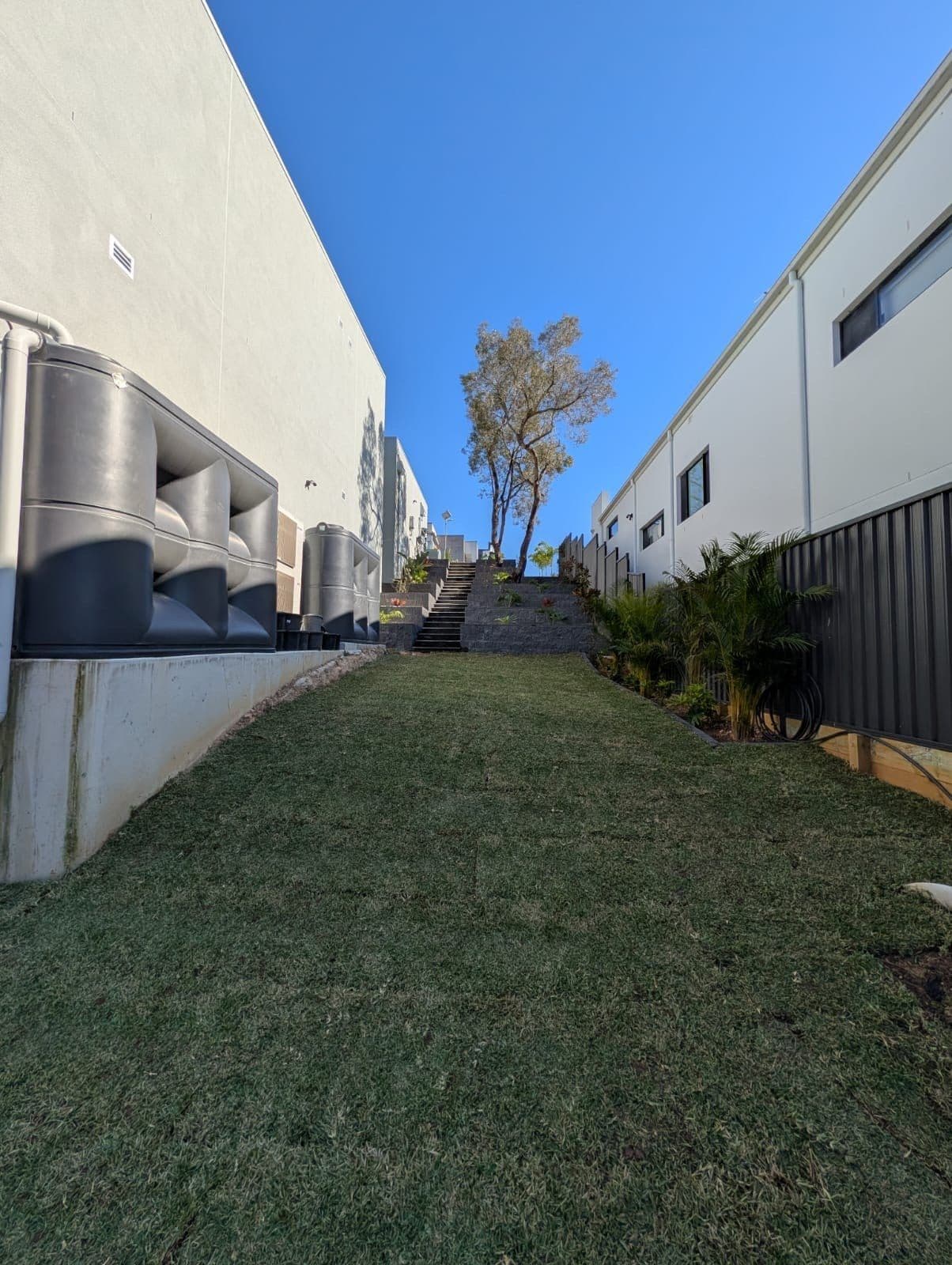
On a steep driveway, choose a textured, slip-resistant paver and an interlocking pattern. Exposed aggregate, flamed or split-face stone, and tumbled or rough-finished concrete give tyres and shoes something to grip, especially in a Sydney downpour. Smooth honed or polished finishes look great on the flat but get slippery on a slope.
Slopes also make the pattern and edges work harder, because gravity is constantly trying to pull the field downhill. Herringbone, strong edge restraints and sometimes intermediate concrete beams across the driveway help keep everything where it was laid. And drainage gets more important, because water running down a slope will find any weakness in the joints and the base. Plenty of blocks around Box Hill and the Hills District have a decent fall to the street, so this comes up more often than you might think.
Are permeable pavers a good idea for a driveway?
Permeable pavers can be a good idea if water is a problem on your block. They have wider joints or open cells that let rain soak through into a specially designed base, instead of sheeting off onto the street or pooling against the garage.
 buttering paver house bg
They are not a straight swap for standard pavers, though. The base underneath is built differently so it can hold and drain water, and the joints need keeping clear so they do not clog. If you are thinking about them, ask how the base will be designed for your soil. Whether permeable paving counts toward any stormwater requirement is a question for your council, so check with The Hills Shire Council or your local council before you rely on it.
What colour pavers hide oil stains best?
Mid-tone and blended colours hide oil drips, tyre marks and dirt best. Very light pavers show every drip from the car, and very dark pavers show dust, leaf litter and tyre scuffs, and they get hotter in summer. A blend of two or three tones, or a speckled finish, is the most forgiving option for a busy driveway.
A few colour tips:
- Look at a sample outside, wet and dry. Showroom lighting flatters everything.
- Match the roof, not the front door. A paver that picks up the roof colour or the brickwork will look right for longer than one matched to a trend.
- Seal where it helps. Sealing natural stone and some concrete pavers makes oil easier to clean up before it soaks in. Ask whether the paver you have chosen benefits from it.
A quick checklist before you choose
Start with the job, then the look. Tick these off before you fall in love with a sample:
- Rated for vehicles, at the right thickness.
- A format small enough to interlock, or a clear plan to support a larger one.
- Laid in herringbone, with proper edge restraints.
- A finish with enough grip for your slope.
- A colour that hides what your driveway actually sees: oil, dust and tyres.
- A plan for drainage and the base.
And when you are comparing quotes, ask each contractor how they will build the base and hold the edges, and check their licence on NSW Fair Trading. That is where quality really differs. For a feel for what different materials cost to lay, see our paving cost per square metre guide.
Get the driveway laid right
The best pavers for driveways are the ones chosen for the load, laid in a pattern that locks together, and held in by proper edges. The brochure photo is the easy part.
At Infocus Land Solutions we lay concrete, clay and natural stone driveways across Box Hill and the Hills District, and we will happily talk you through the options on site. See our paving and driveways service in Box Hill or get in touch to book a site visit.
Talk to Mike
Get an honest quote for your place
0406 100 318A free quote, no obligation, and the price we give is the price you pay.